
Small white Maltese sitting and wearing a teal step-in harness for small dogs on a light blue background
4.8/5 based on +200 reviews

Step-In Harness for Small Dogs

Step in harnesses for small dogs that skip the over-the-head moment your dog dislikes. Your dog steps in, you clip the back, and you're done. No tugging, no head squeeze, no stress.

Easy On, Easy Off

No over-the-head struggle

Stress-Free

Calmer for shy dogs

Why a Step-In Harness Makes the Daily Routine Easier

How a Step-In Harness Is Different

A traditional harness goes over the dog's head, which many small dogs resist. A step in harness for small dogs lies flat on the floor, your dog places both front paws into the openings, and you fold the back panel up and clip. Nothing goes over the head at all. The whole process takes a few seconds and removes the single most common point of resistance in getting a small dog ready for a walk. Once a dog learns the routine, most step in willingly on their own.

Find the Right Step-In Harness Type

Step-in harnesses come in different styles to suit different small dogs. Some need breathable mesh for warm days, others a secure hold or a soft padded feel. Browse the main types and pick the step-in design that fits your dog best.

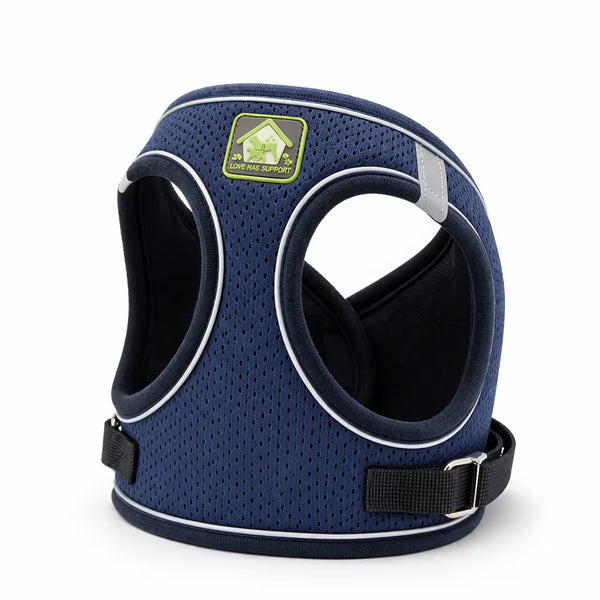
Small dog wearing a navy mesh step-in harness with reflective trim

A mesh step-in harness combines the easy on-and-off of a step-in with breathable comfort. Breathable mesh panels let air flow through the build, the lightweight construction suits small frames, and your dog simply walks into it on the floor. Ideal for warm climates, summer use, and small dogs who dislike both the over-the-head moment and heavy harnesses. A practical everyday choice that keeps the routine simple and the dog cool.

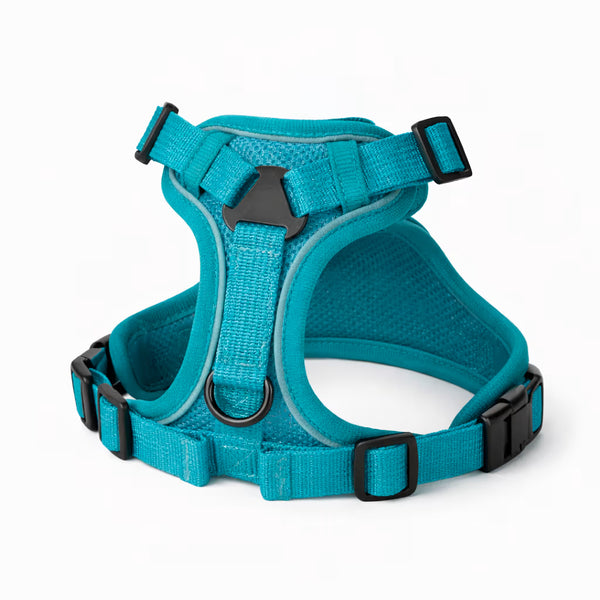
A secure step-in harness pairs easy on-and-off with a snug, escape-resistant fit. Double-adjustment points hold the harness firmly once clipped, so a small dog who pulls or wriggles stays contained without ever needing something pulled over the head. This is the right pick for shy dogs who resist over-the-head harnesses but still pull on the leash. You get the calm routine of a step-in and the security of a well-fitted harness in one.

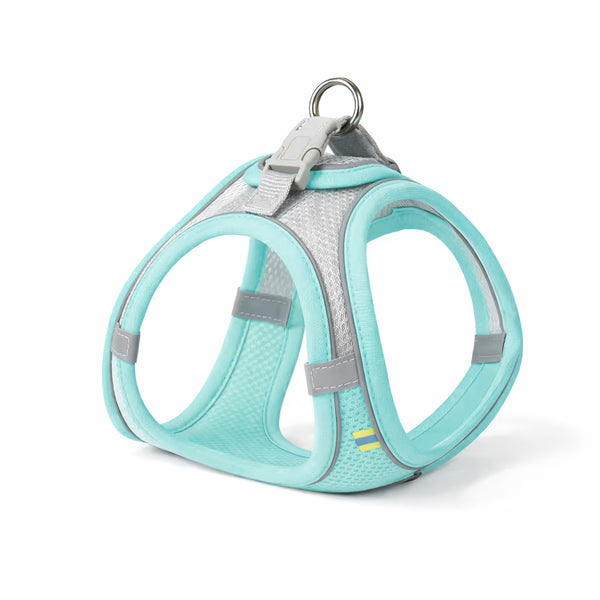
A soft step-in harness wraps the chest in padded fabric with smooth edges, combining gentle comfort with the easy step-in routine. The padding spreads pressure evenly across the front of the body, which suits sensitive small dogs and delicate frames. Best for dogs who need both a stress-free putting-on routine and a gentle feel against the skin. A comfortable choice for the most sensitive small dogs on daily walks.

For shy, anxious, or recently rescued small dogs, the step-in design removes the single most stressful part of getting ready. No hands reaching over the head, no cornering, no struggle. The dog learns to walk into the harness on its own terms, which builds trust over time. This makes step-in harnesses especially valuable for rescues with unclear history or dogs who have developed a fear of the over-the-head motion from a past experience.

FAQ

A step-in harness is one your dog steps into rather than having it pulled over the head. It lies flat on the floor, your dog places both front paws into the openings, and you fold the back panel up and clip it. Nothing passes over the head, which removes the most common point of resistance for small dogs that dislike traditional harnesses.

Yes, step-in harnesses are an excellent choice for many small dogs. They are easiest for dogs who freeze or hide at the over-the-head moment, long-coated breeds whose grooming gets disturbed, shy or rescue dogs, and senior dogs with reduced mobility. As long as the fit is adjusted snugly, a step-in holds just as securely as a traditional harness while making the daily routine far simpler.

Lay the harness flat on the floor with the buckles open and the chest openings facing your dog. Encourage your dog to step in with both front paws, one in each opening. Lift the back panel up over the shoulders and clip it closed. Adjust the straps so two fingers fit underneath snugly. For the first few times, reward with a treat to build a positive association with stepping in.

A properly adjusted step-in harness is just as secure as a traditional one. Dogs escape any harness when it's fitted too loosely, not because of the step-in design itself. Choose a step-in with double-adjustment points, tighten until two fingers fit snugly underneath, and your small dog will stay contained. For dogs who pull hard or have slipped harnesses before, look for a secure step-in design with a snug chest fit.

Step-in harnesses help shy dogs, rescues, long-coated breeds, and senior dogs the most. Any small dog who freezes, shakes, or hides at the over-the-head moment will find a step-in calmer. Long-coated breeds like Yorkies, Maltese, and Pomeranians benefit because nothing flattens the coat. Senior dogs appreciate not having to lift the head into a harness. If your dog dreads getting ready for walks, a step-in is worth trying.

Use a soft measuring tape and measure the widest part of the chest, just behind the front legs. This chest girth is the key measurement for a step-in fit. Also measure the neck circumference for designs with separate adjustment. For long-coated breeds, measure under the coat rather than over it. Compare both numbers to the size chart on each product page and choose the closest fit.

  • Fast Shipping

    Orders are processed quickly and shipped with reliable tracking.

  • Accurate Sizing

    Designed specifically for small breeds with precise measurement guidance.

  • Secure Checkout

    Your payment information is encrypted and protected at every step.

  • Easy Returns

    If the fit isn’t right, returns are simple and straightforward.

    Breeds That Often Prefer a Step-In Harness

    Long-coated and sensitive breeds benefit most from step-in designs. If your dog is a Yorkie, Maltese, or Dachshund, these breed-specific collections include step-in options.