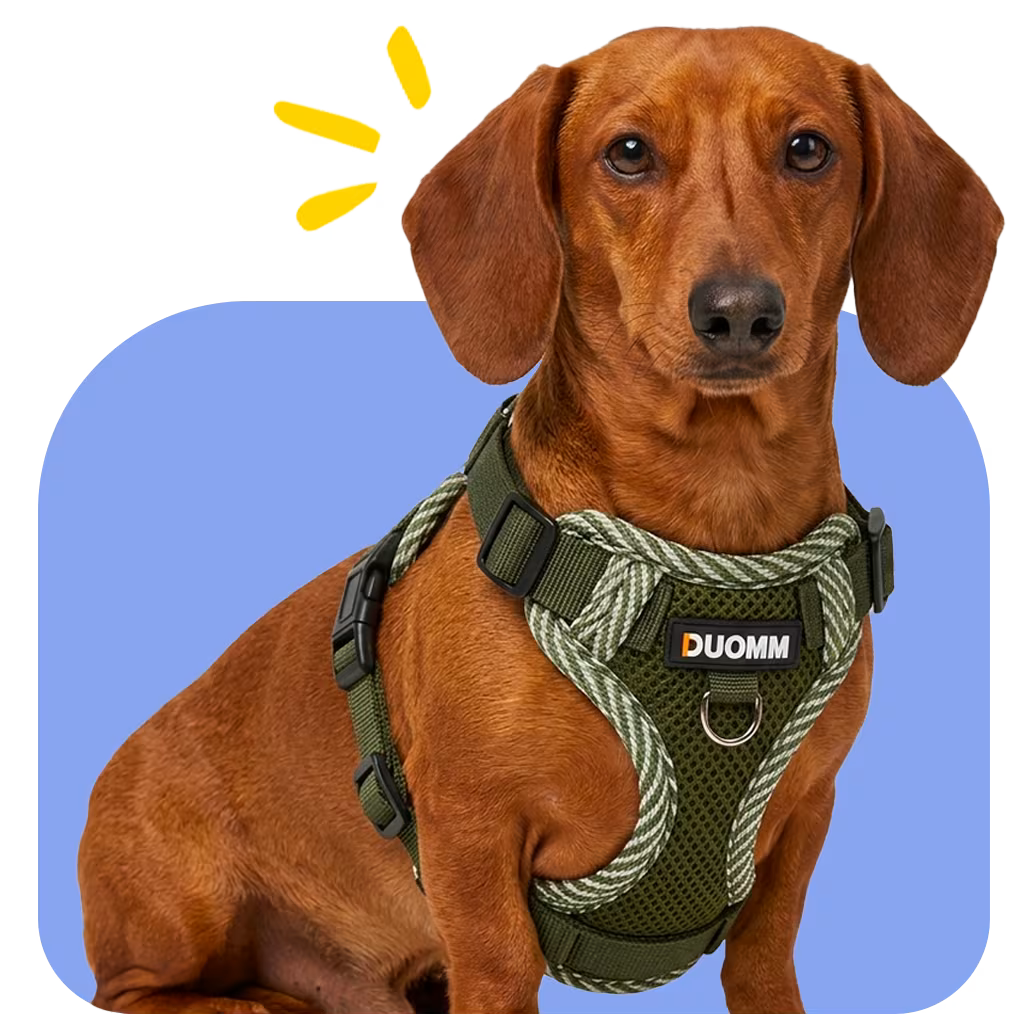
Dachshund sitting and wearing a green mesh harness for small dogs on a light blue background
4.8/5 based on +200 reviews

Dachshund Harness

Dachshund harnesses engineered for the long body, short legs, and broad chest of standard and mini Dachshunds. Built to distribute pull pressure evenly along the back line and away from the neck.

Long-Body Fit

Built for back support

Low-Rise Chest Strap

Stays clear of front legs

Built for the Dachshund's Long-Body Shape

Why a Back-Support Harness for Dachshund Matters

The Dachshund body is long and front-loaded, which means leash pressure on a standard small dog harness gets concentrated on a narrow chest band and pulls the body forward unevenly. A back support harness for dachshund uses a wider back panel that distributes leash pressure across a longer surface, anchoring the leash attachment at a balanced point along the back line. Result: your Dachshund walks with the body aligned, not pulled forward at the chest, and the harness stays comfortable on longer outings.

Find the Right Harness Type for Your Dachshund

Not every Dachshund needs the same harness. Some pull hard and need a no-pull design, others need a softer vest for sensitive backs and bellies. Browse the main types we recommend for the Dachshund body, and pick what fits your dog's behavior and your typical walks.

Dachshund in a comfortable back-support harness

A back support harness for dachshund uses a wider back panel that extends along the body length, distributing leash pressure across the back rather than concentrating it on a single strap. This matters for long-bodied dogs because uneven pressure pulls the body forward at the chest. A balanced back panel keeps the body aligned during walks, especially when your Dachshund stops to sniff or changes direction. Best suited for active Dachshunds, daily walkers, and owners who want maximum support on the back line.

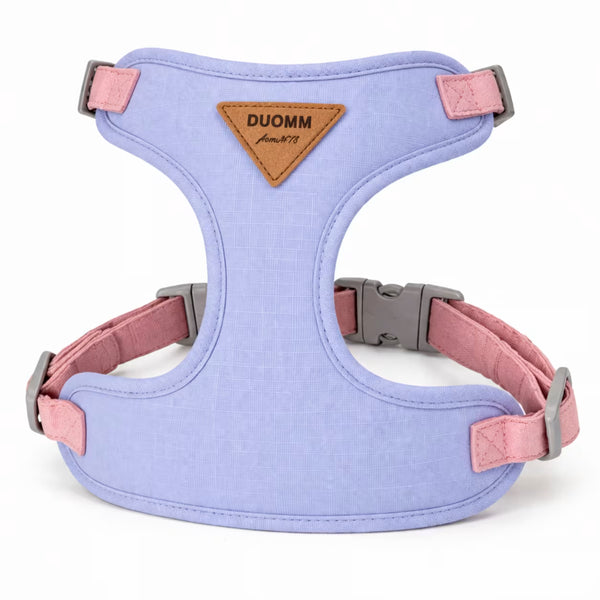
A dachshund harness vest wraps the chest and back in a single panel rather than relying on narrow straps, which suits the long Dachshund body shape particularly well. The vest design spreads pressure across the broad chest and shoulders, eliminating the narrow strap pressure points that can rub against the front legs. Popular with Dachshund owners who want a more secure, full-coverage look combined with everyday comfort. Works well for daily walks, cold weather wear, and dogs with sensitive skin.

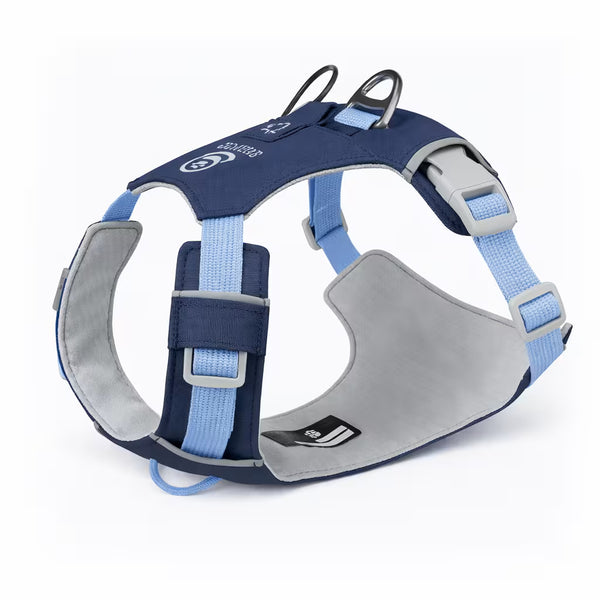
A dachshund harness no pull design uses a front-clip attachment to redirect pulling energy sideways instead of letting it build forward, which matters for the Dachshund body because forward pulling concentrates pressure on the chest and front legs. Calmer walks, controlled redirection, no constant correction. Suitable for strong-pulling Dachshunds, reactive walkers, or dogs in leash training. Most owners notice the difference within the first few walks once their Dachshund learns that pulling no longer drives them forward.

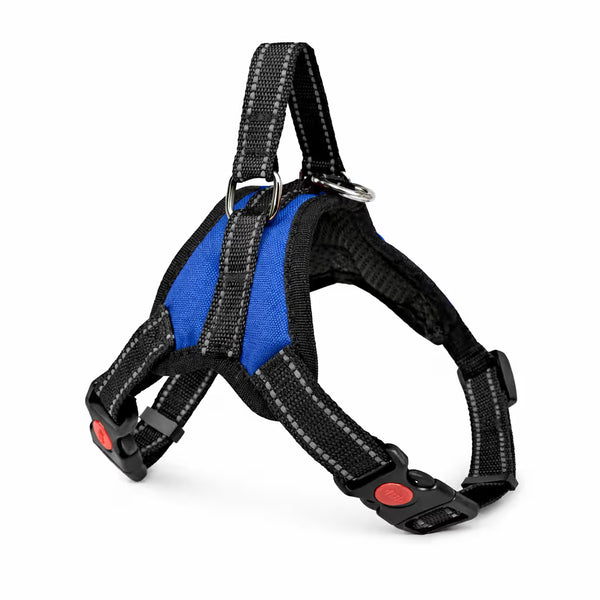
A step in dachshund harness skips the over-the-head moment that some Dachshunds dislike, especially the shy or recently rescued ones. Your dog walks into the harness laid flat on the floor, you fold the back panel up over the shoulders and clip. Done in seconds, no head pressure, no resistance. The step-in design also makes daily wear easier for senior Dachshunds with reduced mobility, where lifting the head into a harness can be uncomfortable. Practical for routine walks and quick outings.

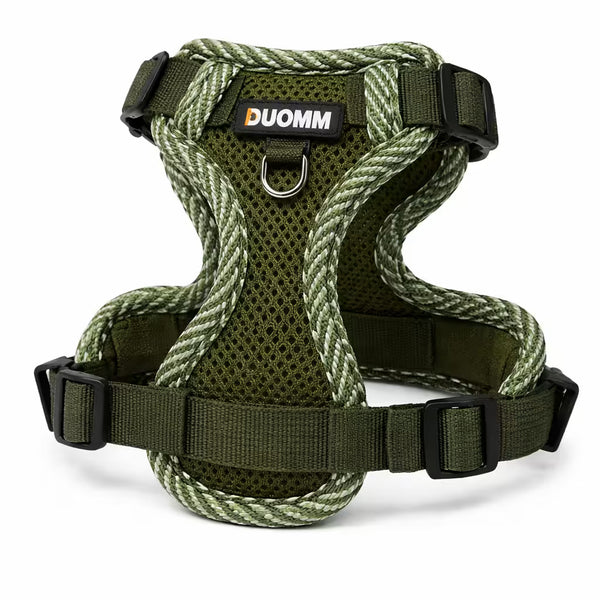
A dachshund mesh harness keeps your dog cool during warmer months without adding weight to a long body that's already close to the ground. Breathable mesh panels let air flow through the build, the lightweight construction respects the smaller frame of mini Dachshunds especially well, and the fabric rinses clean after walks in dusty parks. Soft-edged piping along the straps avoids friction marks behind the front legs, which is a common issue on lower-quality mesh designs for long-bodied dogs.

FAQ

Most adult standard Dachshunds wear M, with chest girth between 17 and 22 inches and weight between 16 and 32 pounds. Mini Dachshunds typically need S or XS, with chest girth between 13 and 17 inches. Measure the widest part of the rib cage just behind the front legs with a soft tape before ordering. Each product page shows the exact size chart for that specific harness.

Mini Dachshunds typically wear XS or S depending on chest girth and weight, usually between 13 and 17 inches at the chest and 8 to 11 pounds. Because mini Dachshunds are particularly long for their height, also check the back length specification on each harness to make sure the back panel fits the body shape without bunching up at the shoulders or the hips.

For step-in designs, lay the harness flat on the floor and encourage your Dachshund to walk into the chest openings, then fold the back panel up and clip. For over-the-head designs, guide the head through gently and clip the side buckle. Adjust both straps so two fingers fit underneath snugly, with the chest strap sitting low behind the front legs. Reward with a treat to build positive association.

A harness is significantly better for daily walks with a Dachshund. The long back and front-loaded weight distribution of Dachshunds make collar pressure uncomfortable, especially during pulling moments. A properly fitted harness spreads the pull across the chest and back panel, keeping the throat area clear and the body aligned. Most Dachshund owners use both: a collar for ID tags, a harness for the leash attachment.

Yes, when they're designed with the Dachshund body in mind. A harness specifically built for the long-bodied Dachshund shape supports the back line, sits the chest strap low and clear of the front legs, and distributes pull pressure across a wider surface than a collar can. Most Dachshund owners and trainers recommend a properly fitted harness for daily walks, training sessions, and active outings.

The best harness for a Dachshund depends on your dog's behavior and your walks. For strong pullers, a no-pull design with a front-clip attachment works best. For sensitive Dachshunds, a padded vest is more comfortable. For warm climates, breathable mesh is the right call. For maximum back-line support, a wider back panel design is ideal. Browse the collection above and match the type to your Dachshund's needs.

Use a soft measuring tape and measure the widest part of the rib cage, just behind the front legs. This is the chest girth, the most important measurement for any Dachshund. Also measure the neck circumference for harnesses with separate neck adjustment, and check the back length specification on each harness if your Dachshund is at the longer end of the breed range. Measure with the dog standing relaxed, not tensed.

  • Fast Shipping

    Orders are processed quickly and shipped with reliable tracking.

  • Accurate Sizing

    Designed specifically for small breeds with precise measurement guidance.

  • Secure Checkout

    Your payment information is encrypted and protected at every step.

  • Easy Returns

    If the fit isn’t right, returns are simple and straightforward.

    Other Long-Bodied and Slender Breeds We Specialize In

    Some breeds share the long-body or slender-frame fit challenges of Dachshunds. If you also have an Italian Greyhound or need a step-in or no-pull design, explore these collections.